Ping Tracker
Showing posts with label Huan Xian. Show all posts

Thursday, July 26, 2012

About Huan, China (Videos and More)

Today, these videos come from Huan County, Gansu Province. This is the hometown of my best friend, Benjamin Xi.

It is a really great little town nestled in the mountains of southeastern Gansu.

As you can see on this map, it's in that weird little fin that borders Ningxia Hui Autonomous Region in the southeast of Gansu.

Huan is one of my favorite places because it's one of the places that is pretty much untouched by Western influence, or at least as untouched as it can be. There are no McDonald's, no KFCs, no Pizza Huts, Starbucks, foreign investors, foreign teachers, foreign firms or anything like that. It's a completely Chinese city, and that's cool. Lanzhou is pretty much a Chinese-only city, but the number of foreigners in the city has definitely increased in the past few years. I don't know if that's a good or a bad thing - I'm just saying it's a trend. I'm not one to really make that kind of call.


I visited Huan last year as well, and it's still pretty much exactly as I remembered it.  It's still a great place that's way out of the way of most foreigners.

Huan is a very old city, with parts of it dating to the Song Dynasty (960-1279 A.D.) and before, including this wall.

Amazing, yeah?

 It's crazy, nothing this old stands in America and as someone who studied and has a degree in History, it's beyond amazing to be able to see and touch something that's been around for so long. 

I'm not knocking America for being too young or anything - it just hasn't had the chance to stick around for that long yet.

Seriously though, how cool is that?!

One of the things Huan is famous for is its embroidery, particularly its handmade insoles. It may not be famous abroad, but in China, Gansu is the home of artful embroidery. This photo on the left is an example of it, although not a great one. Unfortunately I am away from the pair I was given by Ben's mom -- it's much more beautiful than this one. This one's only so-so.

The amazing thing about these is that they're totally made by hand. The firm inside is basically extremely hardened dough (that will never cook again), and the outside white cover is handsewn.

Then the fun begins.

It's all done by needle and thread. One needlestick and colored thread at a time. Ben told me that the pair I was given took about 300 hours of solid work. Wow. 300 hours - imagine putting that kind of time and energy into something that you'll walk on and ruin.

I didn't wear mine. They're too beautiful.

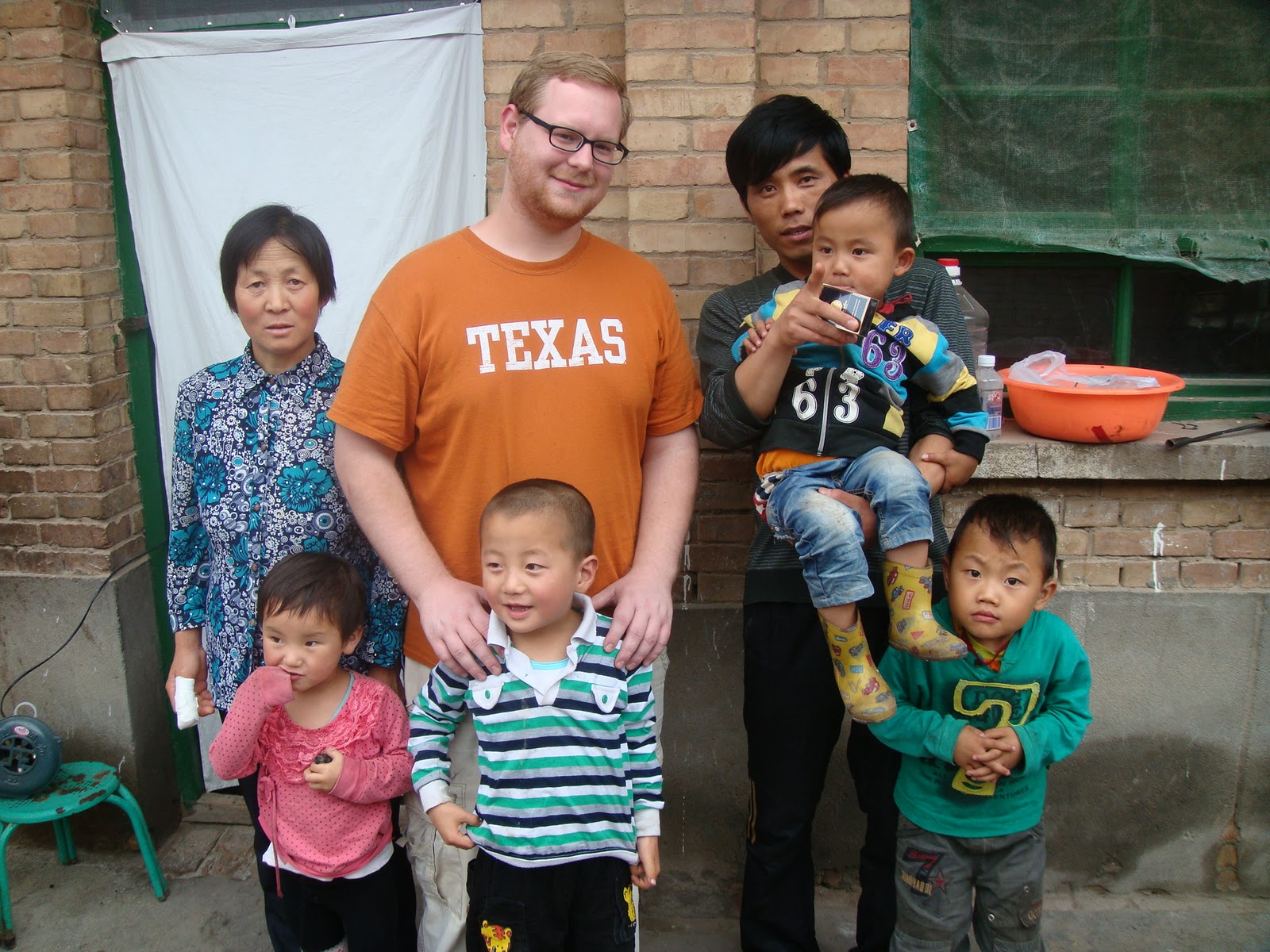
I can't wait to go back again - the people of Huan are hard-working, friendly, very hospitable people. The only complaint I have is that their dialect is hard to understand, but maybe that's because I'm just a white boy who can't speak enough Chinese to understand......

---------------

That's about all I have to say about Huan County at the moment - maybe when my friend Benjamin comes to the States, he can write something about his hometown for you guys! Until next time! My comment section is always open for you!


Saturday, July 14, 2012

The Cave Homes of Gansu

One of the things that I was looking forward to the most on my trip to Gansu in June was the prospect of going to a remote mountain village and staying in a cave.

Yeah, a freaking cave. People do actually live in caves in China - it's not just those stereotypes in the Middle East.

That's it there on the left - it's not just a giant hole in the side of a cliff. They've made it into a home, believe it or not.

They cut out a door-sized hole and a window-sized hole into the side of the mountain, and just burrow out a decent-sized hole, round it out and make it work, and then - BAM - time to move in!

For some reason, I didn't take a picture of the inside - but I do have a video clip of it included in the video below, if you are so inclined to watch it.

The cave itself was pretty nice - it was cool although the weather outside was nice. There was a big bed, wallpaper, a dresser, a TV, and all the other "fixings" for a home. It wasn't this big scary unlivable place - it was rather nice.

Where is this place, you might ask?

It is called 赵台 (Zhao Tai). It's in the  countryside.

I just know that we drove from Huan County (环县) for about 5 hours to get there.

5 hours of the craziest, bumpiest, and scariest roads through some of the most beautiful countryside I have ever seen.

This is the stuff that I had only read about in books and seen in National Geographic.


Terraced mountains literally surround the caves that me, Elena, and Ben are staying in.

The signs of the harvest are everywhere.

The few people that have chainsaws or weed-eaters are letting them loose in the fields, but the rest of the people have their scythes and are at work under the bright glare of the noon sun.

Wheat and apricots are what's being harvested now - the potatoes, corn, and other foods still need some time.

Life here is fundamentally different from life as I know it.

There are no shops nearby, no paved roads, no sound of car horns, no street vendors, no........well, anything.

It's just quiet, clean mountain air and the sound of the goats, donkeys, and other animals that Ben's family raises. Life revolves around the land, and there is little money to be had, and little to spend it on.

It's so different from the money-driven, ambition-fueled society that I have spent my entire life in.

Life here is hard, but I feel like although these people are poor in material ways, they are rich in family and rich in life.

They were so caring and hospitable to me, and it was easy to see that they cared deeply for one another.

I just wish I had been able to better enjoy the moment. I was pretty sick at the time, and I couldn't do a lot of stuff. But I did what I could, and I cherished the time that I spent in this place.

How often do you get to lose yourself in the mountains, be moved by spectacular scenery, stay the night in a cave home, witness (and participate a little bit in) the harvest, be surrounded by new people who nonetheless care about you, and also become buddies with a donkey?

I don't know about you, but that's not something that happens very often to me.


As I said in one of my videos, I'm very grateful to know Ben. He's let me see a side of China that I wouldn't have otherwise been able to see, at least not easily.

I want to take this chance to thank him for that, even though he will probably never read this post, if any posts that I put up on here.


Thanks, Ben.

-------------------------------------

Feel free to comment or to subscribe to my blog - it's totally free and no sign-up and I would love to hear from you!


Tuesday, October 18, 2011

Two Chinas

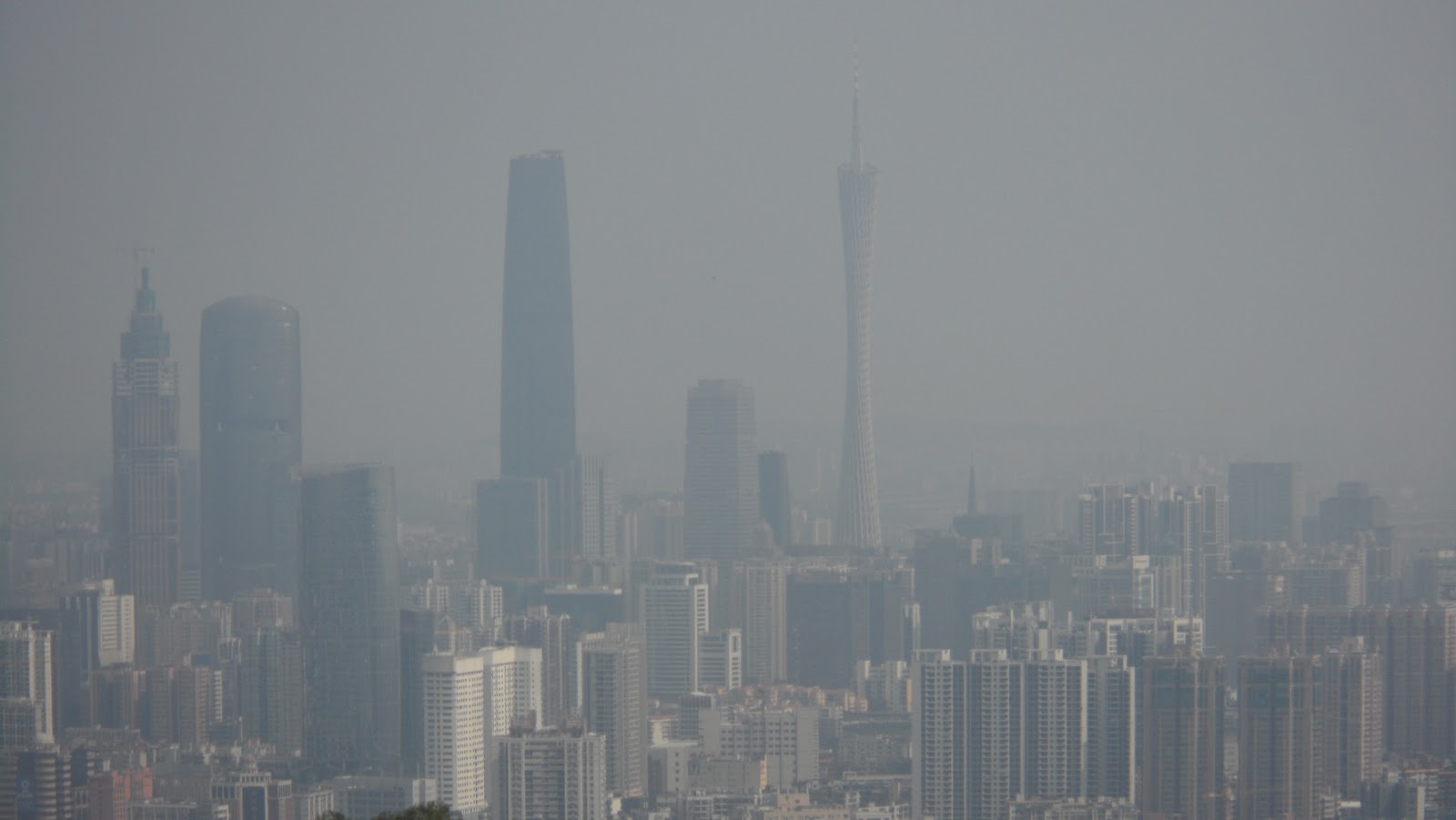
There are two Chinas. One China exists in Beijing, Shanghai, Guangzhou, and Hong Kong. The other China exists in the rest of the country. The main reason these places are as good as different countries is because of development and Westernization. 

In short - this

versus this:

It's a world of difference.

One is even able to find different countries and different worlds even within these Westernized cities. For example, in Beijing, I stayed in hotels and homes far away from the brightly lit and English speaking shopping districts - places with no foreigners and no English speakers - places where speaking Chinese is needed to survive. Even the country’s capital has poor places to rival the images we see of Indian and African slums. These places have one room shacks, trash-strewn alleys and streets, and poorly-clothed people and children. 

Beijing Alleyway/Slum

Not all areas of China are as beautiful as Wangfujing or Tiananmen Square. 

Wanjfujing Shopping District

This is simply reality in China - some areas are incredibly beautiful and amazing to behold, but some areas are poor, polluted, dirty, and difficult to live in. The same is true in every country, and China is no exception. If you want to find a new, excited, fast-paced way of life, you can find it. If you want to find a more rural, relaxed, and traditional environment, you can also find it. 

An easy way to find older and more traditional Chinese culture is to stay in one of Beijing’s remaining Hutongs, which are alleys populated with elderly locals and families.


Within these alleys one can find all sorts of food and community. The elderly sit in the courtyards between their houses or on the street and play chess and watch the passers-by and families come and go as they go to work and pick up their children from school. It is obvious that most of these people know each other and see each other daily, so it is truly a community in the utmost sense of the word. Sadly, these areas are dwindling year by year as some are bulldozed annually to make way for apartment and business building, but some are legally protected by the government as cultural landmarks. 

In Beijing there are many districts, and within some districts, especially in areas concentrated with apartment buildings, things seem more….well, Chinese, and a little less developed. The restaurants are all Chinese and English speakers are rare. Life is more easy-going than the hustle and bustle of the Beijing that most foreigners know. It is the ideal halfway point for a Westerner who knows Chinese to stay if they enjoy the Northeastern style. 永泰小区, in the northern part of Beijing, is one example of this type of place. 
(Pic: The building I stayed in in 永泰小区)


Because Mandarin Chinese is based on the Beijing dialect, understanding the local language presents few problems to the Mandarin learner, in stark contrast to the rest of China, which has numerous dialects. Dialects will be discussed in full in a later chapter. 

Away from the Hutongs are the huge (and expensive) shopping districts of Wangfujing, which is famous throughout China and contains its share of English speakers. The area is brightly lit with lights resembling rain on many streets and modernization is everywhere. Nearby Chang’e Avenue is stuffed with cars, government buildings, and Tiananmen Square lies in the heart of downtown. 

These famous and developed areas of Beijing, just like other famous areas in China, are not much different than the big cities of America. They will, of course, be Chinese, but the feel of these areas and the look of them will be approximately the same. The people who wish to travel to China, but not get uncomfortable with the language difficulty or see and experience things that might shock them will feel right at home in these areas. 

In China’s poorer and less-developed regions away from the east coast, one will find a completely different world of Chinese culture. You can see crowds of people practicing Tai Chi on the streets, doing exercises, playing cards or chess or mahjong, quietly sipping tea and watching the traffic, or downing a few beers with friends and talking to passersby. These things happen in Beijing and the other big cities, but not as much. The environment of the smaller cities very much enhances the feeling of community and people are more relaxed and take things easier. 

A strange phenomenon emerges in many poor areas of the world, including China. In the poorer and less-developed areas, people have less money and live in poorer conditions, but seem to be much happier and content people overall than the wealthy and comfortable people in the cities. The nicest, happiest, and most hospitable people I ever met in China lived in a small 7‘x11’, one room house with very few possessions, no private bathroom, no shower facilities, and even their house was not fully closed to the houses on either side. The top 1.5 feet of the 10-foot wall was open to either side.

 The most kind and hospitable people I have met, on the whole, live in what America calls poverty. The less people have, the more willing they are to share what they have with you. If you spend all your time in China’s big urban areas and never experience what life in rural China is like, you will have missed a wonderful opportunity. 
Related Posts Plugin for WordPress, Blogger...