All right! I finally put together my Wuquan (5 Springs) Mountain video! I have just been lazy, so I hadn't done it till a couple of days ago.....but here it is! Sorry for the nearly two week-long delay!
If you're having problems with the embedded video, click here to go to the original video page. There shouldn't be a problem on that page
Unfortunately, I've lost my USB Drive, so I can't transfer any more pictures of the place to this computer yet....so, sorry about that. I hope I can upload them soon!
The video will just have to do for now. But, luckily, this is in HD - I took the pictures and the raw footage with my iPhone, which, although is a little unsteady, does a pretty decent job in the HD department!
Anyway, yeah, Wuquan was a fun way to spend a morning, as well as Lan Mountain. What, mountains AND hotpot???!!! Fantastic!!! That's a recipe for win.

Showing posts with label Chinese Cities. Show all posts
Showing posts with label Chinese Cities. Show all posts
Thursday, October 18, 2012


Thursday, September 27, 2012
Good Times and Being Content
So, it's been a while since I posted something, and a lot has happened in the past few days. I'll do a post tomorrow or the day after about the other stuff.
 One thing that has been the highlight of my recent life was my trip to Bai Ta Shan, or White Pagoda (Tower) Mountain Park in Lanzhou.
It's located just north of Zhongshan Bridge near downtown Lanzhou.
Along with the bridge itself, it is a central landmark of the city. If you say, "Oh, it's by Bai Ta Shan," people will know exactly where you mean.


I had seen this exact picture so many times on the internet, but the pictures just aren't the same as actually being there. You just think to yourself, "Wow, I can't believe that I live here. This is such a crazy, amazing, polluted, wonderful, dirty, loud, and unique city. How did I end up here?" I did another post about "Seeing The Elephant," which talked about how it's impossible to understand these kind of feelings without actually being there. I hope someday you can come here and experience these things for yourself. It's great here.
 You know, I came from a very small city of about 100,000 people, and to be in a city like this is a very interesting and wonderful experience.
It's so different from my hometown - Lanzhou has a long history and has a lot of special food and culture. I'm not saying that my hometown doesn't have these things, it's just a different kind of special.
Just look at this place - do you live in a place like this?? If you do, that's great! If you don't, try it! If you live in a big city, try going out to the countryside for a little while - find something different. It's been great for me, and I can't wait to try even more new things. It gives you this little rush - a little endorphin buzz every time you do something. It's something that can't be replicated.
 Going to Bai Ta Shan may have just been a fun afternoon for my friends, but for me, it was a time to just be in the moment and reflect about where I'm at in my life right now.
I remember, just before I left for China, I was at church, and the preacher did a sermon about being content and not being restless in your life. For some people, they can find it in their job, some people can find it in religion, some people can find it with their friends, or any number of places.
For me, I am truly content in being here and continually learning new stuff and learning new things. I really wish I was my sister sometimes so I could pull out some crazy word from the Oxford English Dictionary to express myself, but I'm not, so I can't. I definitely miss home sometimes - my family, my friends, and the food, but I'm having a good time right now being a teacher and doing my China thing.
__________
Well, that's all I have for tonight - I'll put up another post about some other stuff this weekend!

It's located just north of Zhongshan Bridge near downtown Lanzhou.
Along with the bridge itself, it is a central landmark of the city. If you say, "Oh, it's by Bai Ta Shan," people will know exactly where you mean.

Yeah, you can see from the pictures here, it's a pretty cool place - there's a lot of trees and shade, and it's pretty "new."
Last year, it was being remodeled, so I didn't get to go to the park itself. I just got to go to another peak of the mountain range.
I went with a bunch of Chinese friends and another foreign teacher. It was a great afternoon - a lot of laughs and a lot of new sights.

The part is facing directly south. If you look at the picture here, you can see the gate to the park is directly across the street from the north-south running Zhongshan Bridge. Pretty much every important building, historical site, park, etc. has a gate somewhere, if not the main gate, facing north or south.
That makes living in a city like Lanzhou easy. The river runs east-west, so you always can figure out where you are.

I had seen this exact picture so many times on the internet, but the pictures just aren't the same as actually being there. You just think to yourself, "Wow, I can't believe that I live here. This is such a crazy, amazing, polluted, wonderful, dirty, loud, and unique city. How did I end up here?" I did another post about "Seeing The Elephant," which talked about how it's impossible to understand these kind of feelings without actually being there. I hope someday you can come here and experience these things for yourself. It's great here.

It's so different from my hometown - Lanzhou has a long history and has a lot of special food and culture. I'm not saying that my hometown doesn't have these things, it's just a different kind of special.
Just look at this place - do you live in a place like this?? If you do, that's great! If you don't, try it! If you live in a big city, try going out to the countryside for a little while - find something different. It's been great for me, and I can't wait to try even more new things. It gives you this little rush - a little endorphin buzz every time you do something. It's something that can't be replicated.

I remember, just before I left for China, I was at church, and the preacher did a sermon about being content and not being restless in your life. For some people, they can find it in their job, some people can find it in religion, some people can find it with their friends, or any number of places.
For me, I am truly content in being here and continually learning new stuff and learning new things. I really wish I was my sister sometimes so I could pull out some crazy word from the Oxford English Dictionary to express myself, but I'm not, so I can't. I definitely miss home sometimes - my family, my friends, and the food, but I'm having a good time right now being a teacher and doing my China thing.
__________
Well, that's all I have for tonight - I'll put up another post about some other stuff this weekend!
Saturday, September 8, 2012
The Unfamiliarity of it All
Finally, a new video is here! Yeah, I've been pretty much keeping to a once-a-week update unconsciously, so I guess I'll be sticking to that schedule!
I just got my teaching schedule and textbook/curriculum and everything, so I'll be putting up a post about that soon.
First, the videos! Watch, and then I'll get into more detail below. As always, YouTube and Youku:
As I said in my previous post and in this video, everything you do here is different. Everything. And to a certain extent, it is really wonderful, but sometimes it can be really tough.
I'm not really sure how to explain it, but there's a great amount of satisfaction to be had in daily life in China, especially in a place like Lanzhou, where there are few foreigners.
You find yourself in these seemingly normal circumstances here - buying food, going to a restaurant, talking to people in Chinese, seeing the neon lights at night, and all of these other things......to you they are normal life, and to be able to function in these ways without really thinking about it is really satisfying.
 You have to use your Chinese to do all of these things, you have to always be aware of the fact that people may be staring at you literally all the time, you have to use your patience to deal with crowds or lines or noise or whatever, and at the end of the day, when (or if) you think about what happened that day or what you did that day, you kind of say,
"Oh, yeah, I totally just did ______ in China/Chinese, who knew I would/could ever do that?"
Just doing simple things requires a little work in another language or requires a little more thought, and it's these little daily/hourly challenges that make life here so interesting. Some people relish how awesome new and unfamiliar things are, and some people just don't.
You think and live with a different part of your mind here than you do back home. Because you're utilizing this other language, it changes how you think and how you deal with the circumstances around you, and that's something you just can't fully explain to people. It's one of the biggest reasons that people who come here stay here.
That's about all I've got for you now - I guess I'll talk to you later!
Austin
I just got my teaching schedule and textbook/curriculum and everything, so I'll be putting up a post about that soon.
First, the videos! Watch, and then I'll get into more detail below. As always, YouTube and Youku:
As I said in my previous post and in this video, everything you do here is different. Everything. And to a certain extent, it is really wonderful, but sometimes it can be really tough.
I'm not really sure how to explain it, but there's a great amount of satisfaction to be had in daily life in China, especially in a place like Lanzhou, where there are few foreigners.
You find yourself in these seemingly normal circumstances here - buying food, going to a restaurant, talking to people in Chinese, seeing the neon lights at night, and all of these other things......to you they are normal life, and to be able to function in these ways without really thinking about it is really satisfying.

"Oh, yeah, I totally just did ______ in China/Chinese, who knew I would/could ever do that?"
Just doing simple things requires a little work in another language or requires a little more thought, and it's these little daily/hourly challenges that make life here so interesting. Some people relish how awesome new and unfamiliar things are, and some people just don't.
You think and live with a different part of your mind here than you do back home. Because you're utilizing this other language, it changes how you think and how you deal with the circumstances around you, and that's something you just can't fully explain to people. It's one of the biggest reasons that people who come here stay here.
That's about all I've got for you now - I guess I'll talk to you later!
Austin
Wednesday, March 7, 2012
My Daily Life in a Chinese City
I've been really surprised at the number of views on my posts concerning what Chinese cities are like, so I thought I'd post a little something about the subject, since it seems to be a topic of interest.
[by the way, the blog hit 10,000 total hits a few days ago! Great milestone for me!]
Although I'm not in China now, I can remember very well the daily routine of the life of a foreign student in mid-sized Lanzhou (3.3 million people) when school was not in session. Some of the stuff is not exactly pretty, but it's part of what's really in China. I love China just as much (or more) than America, but there's no such thing as a perfect country.
 Breakfast
Breakfast usually consisted of 饼子 of some kind (sort of like if a pancake and a crepe had a baby. A wonderful, tasty, baby), and then a short walk to the bus stop to either the West Campus of 兰州理工大学 (Lanzhou University of Technology) or to 西关, a downtown region of Lanzhou. It could be any other place, but for this post it'll be 西关 (pronounced "She-Gwan") and Zhongshan Bridge.
The Bus
In Chinese cities, the bus is what most people take to get places. Depending on where you're at, they can be air conditioned and clean with a few people in them or hot, dirty, musty, smoky, and crowded with all of the migrant workers of the entire city.
It's different from place to place, and you never really know what it's gonna be like when you step on - you just hope to God that it's not so bad.
On an average day in Lanzhou, you'll be standing up in the bus. Only one bus line in the city has air conditioning, and I think it's bus line 1. How appropriate, right? The #1 bus is the only one with air conditioning.
Most buses have windows you can slide open if it gets too hot, but it's generally not too unbearable unless it's the weekend and everybody's going downtown to shop. God forbid. I really didn't enjoy the weekend crowds.
The Streets
Just like every section in this post - it depends on where you are. If you're in Guangzhou or Beijing or any other city that sees a lot of tourist and/or foreign business activity, it's pretty clean and organized with a decent amount of English speakers.
However, if you're in Lanzhou, Huan Xian, parts of northern Beijing, or any other place where not many tourists go and no foreigners "dare to venture", it's a little different. Many streets are dirty or under construction, there's a lot of trash in places, and you can see a lot more of China's poverty. It's in these moments that you are forced to confront the fact that you're in another country. Not many streets in America will have kids wearing only dirty t-shirts run through the street and playing in trash piles and peeing on the street. Seen it.
The People

When walking the streets of Lanzhou, I was usually left alone except for the occasional "Hello," but it was whenever I was idling about by myself or just standing alone looking at the Yellow River that people usually came up and talked to me.
(Okay, this photo is cheating...it's actually on a train, but he DID just start talking to me)
It's true - it's not just some funny story we tell people for fun. People really do come up to foreigners and try to practice their English! If they don't speak English, you'll get to practice your Chinese. This is especially true in certain situations:
1.) The person who comes up to you is alone.
2.) You are alone or are only with other foreigners.
3.) You are just idling about and not really doing anything.
4.) You say you can speak a little bit of Chinese and are friendly.
If you're with another Chinese person, it's rare that a strange Chinese person will approach you if they speak sub-standard English. They'll assume your Chinese buddy will be fluent and that they'll be inferior. Best advice - go alone to a place where you know you can just hang out and chill.
 For me, that was the area around Zhongshan Bridge.
The area on the far side of this picture is green, shaded, and dotted with small beaches and areas where you can sit and buy a drink and just chill.
Along that street, you can see a lot of older people in the morning doing Tai Chi, and in the afternoon you can see some doing different types of martial arts or playing the Erhu or any number of activities.
It's a great little area that reminds you of why you wanted to come to China in the first place.
After hanging out and talking to a few people, it's always cool to go to 西关 (pronounced "she-gwan"), which is the most cosmopolitan area of the city. It's mostly pedestrian roads and has a lot of shopping centers and restaurants and tea houses. It's the perfect place to go for a snack. I don't really have any pictures of 西关 itself, which is something I'll have to rectify, but I've got some video of it here and here if you want to check it out.
Other
Usually, after that, I'd go back home to the apartment and just chill until dinner, which was at one of the local restaurants, but I'd also do laundry every couple of weeks or so. Very involved process you can see here at my YouTube page. If YouTube's blocked in your country, sorry....I'll put them up on Youku eventually
You'll get a few (or a lot) of strange calls. I've gotten calls from:
1.) The International Office of L.U.T. asking if I would hang out with a high school kid who wanted to practice his English
2.) From a local TV producer asking me do participate in a segment about my culture shock in Lanzhou
3.) From a primary school asking me to come down to participate in "English Adventure Day"
4.) From a VERY wealthy businessman who wanted me to help him in some very lucrative (and possibly illegal) business ventures
5.) From many random people that I never met or talked to before.....just to chat! "You're a foreigner in Lanzhou? Oh, what's your name?......etc."
6.) Calls from anyone and everyone inviting me to dinners, parties, just to hang out, help with schoolwork
7.) To travel to Tibet......wait, what? Yeah, I got a series of texts/calls from some random guy who wanted to take me to Tibet. My friend Elizabeth would've jumped on it in a heartbeat haha. Yeah, I don't think I told you about that one, did I? Maybe I should've called you, yeah? haha
I'm a pretty friendly guy, and once I got over there, I made it a policy of mine to never refuse an offer for a new experience unless it was: physically dangerous, illegal, or if I was really ill. I never once did, and I don't regret any of it - I had a lot of interesting experiences, and you've got to be open.
When people find out how open you are to try new stuff, you'll get more and more friends, more and more calls, and you'll be a popular dude! (or chick).
So, if I had to sum up my Lanzhou life in a nutshell, that'd be about it!
See you guys next time,
Austin.
[by the way, the blog hit 10,000 total hits a few days ago! Great milestone for me!]
Although I'm not in China now, I can remember very well the daily routine of the life of a foreign student in mid-sized Lanzhou (3.3 million people) when school was not in session. Some of the stuff is not exactly pretty, but it's part of what's really in China. I love China just as much (or more) than America, but there's no such thing as a perfect country.
 Breakfast
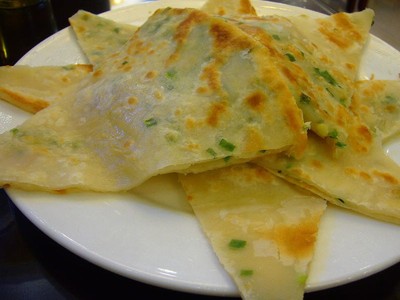
Breakfast usually consisted of 饼子 of some kind (sort of like if a pancake and a crepe had a baby. A wonderful, tasty, baby), and then a short walk to the bus stop to either the West Campus of 兰州理工大学 (Lanzhou University of Technology) or to 西关, a downtown region of Lanzhou. It could be any other place, but for this post it'll be 西关 (pronounced "She-Gwan") and Zhongshan Bridge.
The Bus
In Chinese cities, the bus is what most people take to get places. Depending on where you're at, they can be air conditioned and clean with a few people in them or hot, dirty, musty, smoky, and crowded with all of the migrant workers of the entire city.
It's different from place to place, and you never really know what it's gonna be like when you step on - you just hope to God that it's not so bad.
On an average day in Lanzhou, you'll be standing up in the bus. Only one bus line in the city has air conditioning, and I think it's bus line 1. How appropriate, right? The #1 bus is the only one with air conditioning.
Most buses have windows you can slide open if it gets too hot, but it's generally not too unbearable unless it's the weekend and everybody's going downtown to shop. God forbid. I really didn't enjoy the weekend crowds.
The Streets
Just like every section in this post - it depends on where you are. If you're in Guangzhou or Beijing or any other city that sees a lot of tourist and/or foreign business activity, it's pretty clean and organized with a decent amount of English speakers.
However, if you're in Lanzhou, Huan Xian, parts of northern Beijing, or any other place where not many tourists go and no foreigners "dare to venture", it's a little different. Many streets are dirty or under construction, there's a lot of trash in places, and you can see a lot more of China's poverty. It's in these moments that you are forced to confront the fact that you're in another country. Not many streets in America will have kids wearing only dirty t-shirts run through the street and playing in trash piles and peeing on the street. Seen it.
The People

When walking the streets of Lanzhou, I was usually left alone except for the occasional "Hello," but it was whenever I was idling about by myself or just standing alone looking at the Yellow River that people usually came up and talked to me.
(Okay, this photo is cheating...it's actually on a train, but he DID just start talking to me)
It's true - it's not just some funny story we tell people for fun. People really do come up to foreigners and try to practice their English! If they don't speak English, you'll get to practice your Chinese. This is especially true in certain situations:
1.) The person who comes up to you is alone.
2.) You are alone or are only with other foreigners.
3.) You are just idling about and not really doing anything.
4.) You say you can speak a little bit of Chinese and are friendly.
If you're with another Chinese person, it's rare that a strange Chinese person will approach you if they speak sub-standard English. They'll assume your Chinese buddy will be fluent and that they'll be inferior. Best advice - go alone to a place where you know you can just hang out and chill.

The area on the far side of this picture is green, shaded, and dotted with small beaches and areas where you can sit and buy a drink and just chill.
Along that street, you can see a lot of older people in the morning doing Tai Chi, and in the afternoon you can see some doing different types of martial arts or playing the Erhu or any number of activities.
It's a great little area that reminds you of why you wanted to come to China in the first place.
After hanging out and talking to a few people, it's always cool to go to 西关 (pronounced "she-gwan"), which is the most cosmopolitan area of the city. It's mostly pedestrian roads and has a lot of shopping centers and restaurants and tea houses. It's the perfect place to go for a snack. I don't really have any pictures of 西关 itself, which is something I'll have to rectify, but I've got some video of it here and here if you want to check it out.
Other
Usually, after that, I'd go back home to the apartment and just chill until dinner, which was at one of the local restaurants, but I'd also do laundry every couple of weeks or so. Very involved process you can see here at my YouTube page. If YouTube's blocked in your country, sorry....I'll put them up on Youku eventually
You'll get a few (or a lot) of strange calls. I've gotten calls from:
1.) The International Office of L.U.T. asking if I would hang out with a high school kid who wanted to practice his English
2.) From a local TV producer asking me do participate in a segment about my culture shock in Lanzhou
3.) From a primary school asking me to come down to participate in "English Adventure Day"
4.) From a VERY wealthy businessman who wanted me to help him in some very lucrative (and possibly illegal) business ventures
5.) From many random people that I never met or talked to before.....just to chat! "You're a foreigner in Lanzhou? Oh, what's your name?......etc."
6.) Calls from anyone and everyone inviting me to dinners, parties, just to hang out, help with schoolwork
7.) To travel to Tibet......wait, what? Yeah, I got a series of texts/calls from some random guy who wanted to take me to Tibet. My friend Elizabeth would've jumped on it in a heartbeat haha. Yeah, I don't think I told you about that one, did I? Maybe I should've called you, yeah? haha
I'm a pretty friendly guy, and once I got over there, I made it a policy of mine to never refuse an offer for a new experience unless it was: physically dangerous, illegal, or if I was really ill. I never once did, and I don't regret any of it - I had a lot of interesting experiences, and you've got to be open.
When people find out how open you are to try new stuff, you'll get more and more friends, more and more calls, and you'll be a popular dude! (or chick).
So, if I had to sum up my Lanzhou life in a nutshell, that'd be about it!
See you guys next time,
Austin.
Thursday, December 15, 2011
China's Ghosty Places, Oblivion, and Life Reflections
Yes, I wrote Ghosty, it is not a typo!
I've decided it is defined as "similar to spooky, but different. Like ghostly, spooky, and creepy all packed into a word taco."
So, yeah! That's what I get for being woefully inarticulate.
For a few years now, there have been stories circulating luxurious cities and places in China that are deserted because either no one lives around or can afford to live or visit those places.
- Wait, deserted cities in China?
- These aren't demo photos - these are photos that were taken on normal days at normal times when, in ordinary cities, people would be walking by.

I don't know if you've been paying attention, but it seems to occur alarmingly often for a country like China that's asserting itself on the world stage and holding a lot of the world's debt.
 It's a well-known and well-established fact that China is doing anything and everything it can to grow its economy in order to be a player on the world stage.
In some cases, they do it really well, like when they invest in factories which cheaply produce stuff that America won't even dare to try to manufacture because Americans need such high pay.
And then there's this.....
 "The area is filled with office towers, administrative centers, government buildings, museums, theaters and sports fields—not to mention acre on acre of subdivisions overflowing with middle-class duplexes and bungalows. The only problem: the district was originally designed to house, support and entertain 1 million people, yet hardly anyone lives there." - TIME (link here)


If you guys are curious, here are some of the sources I used to write this post:
China's Deserted Disneyland
Amazing Satellite Images of China's Ghost Cities
Daily Mail - Ghost Towns of China
Dateline Report
TIME - Ordos, China: A Modern Ghost Town
I've decided it is defined as "similar to spooky, but different. Like ghostly, spooky, and creepy all packed into a word taco."
So, yeah! That's what I get for being woefully inarticulate.
For a few years now, there have been stories circulating luxurious cities and places in China that are deserted because either no one lives around or can afford to live or visit those places.
- Wait, deserted cities in China?
- These aren't demo photos - these are photos that were taken on normal days at normal times when, in ordinary cities, people would be walking by.

Yep. (Ordos, China)
I don't know if you've been paying attention, but it seems to occur alarmingly often for a country like China that's asserting itself on the world stage and holding a lot of the world's debt.

In some cases, they do it really well, like when they invest in factories which cheaply produce stuff that America won't even dare to try to manufacture because Americans need such high pay.
And then there's this.....

Also, in this Dateline report from earlier this year, an expert says that "there are an estimated 64 million empty apartments in China today....they're building stuff for which there's no demand."

.........freakin back up, what??!! A (conservatively estimated) 64 million empty apartments in China today. The expert goes on to say that the property bubble which burst in the United States pales in comparison to what will happen in China if this goes on.
One thing that is mentioned in that Dateline Report is the stringent requirements for home ownership that cannot be forgotten. The buyer has to pay 50% upfront and the balance of the account within 3 years.
(Dongguan, China's main avenue...freakin empty)
Although this hinders the people being able to buy these expensive houses because of the lack of a really good credit system in China, it's also what's kept China from experiencing a credit crisis like the United States has.
China's just full of these little paradoxes. There are cities with waaay too freakin many people like Chongqing and Beijing, but there are also deserted cities that were made to hold anywhere between 1 million and 17 million people (depending on which deserted city you're looking at). There's no credit market, which means that people can't buy the expensive stuff the government is building, which is feeding into a coming crisis, but it's also saved them from a crisis that the United States is still working its way through.
[insert clever, appropriate, and memorable segue here]
These places are all free and legal to visit, with the (sort of) exception of the one below.

But would you really go?
On one hand, I'd really like to go to one of these empty cities, but on one hand, it'd be a version of hell...you've got the whole world to yourself for all eternity, but you're alone. Forever.
The idea of emptiness and absolute oblivion has always terrified me, so I try not to think about it, but I can't help it when I see these kind of places.
("Wonderland" - an abandoned theme park 45 minutes outside of Beijing)

I mean, who wouldn't be freaked out visiting a completely empty city or a rundown and deserted Chinese Disneyland that was built out in the middle of a cornfield?
But who doesn't want to at least go to one of them?
If you don't get freaked out or at least uncomfortable every once in a while, then you're not alive. I think that's probably the reason that we find the idea of ghost towns so fascinating - we see these ghosty places as a reflection of what the Earth will be like after we're dead and gone, because let's face it, humanity won't last forever.
Part of what life is about is trying to come to grips with the fact that it doesn't last forever, and what these ghosty places do is make us indirectly ponder our lasting impact on the world.
What will it matter what we've done, if 500 years after the last human dies, plants and nature swallow up the last trace of humanity's buildings, sidewalks, computers, and literature? I'm not sure - it's not a question I can ask, but it's something to think about.
China's Deserted Disneyland
Amazing Satellite Images of China's Ghost Cities
Daily Mail - Ghost Towns of China
Dateline Report
TIME - Ordos, China: A Modern Ghost Town
-----------------------
Feel free to comment or to subscribe to my blog - it's totally free and no sign-up and I would love to hear from you!
Wednesday, October 26, 2011
Grass Rubbing Amongst a Lack of Greenery
(Part 1 of a 2 or 3 part series)
Because you are a foreigner, while you are staying in China, you will likely be staying in the midst of a large or mid-sized city in one of the many, many high-rise hotels or apartment buildings.
Because you are a foreigner, while you are staying in China, you will likely be staying in the midst of a large or mid-sized city in one of the many, many high-rise hotels or apartment buildings.
Every person in the city lives in one of these apartment buildings.

This is super, super nice. Don't expect to see many (if any) this clean.
Chinese cities are very different from American cities and the environment leads to different attitudes among the Chinese people about the environment and green places.
Chinese cities all have parks, which are usually pretty green and pretty awesome places, but outside these parks, there is a conspicuous lack of color throughout the cities.

at Beijing's Beihai Park
The buildings are usually all the same shade of gray or off-white, and the streets are the usual black and the sidewalks are grey or have red and yellow tiling.

This is a pic I took in Guangzhou. See? There's just not much color

Just not real green...
These colors are absolutely everywhere and rarely, if ever, vary throughout the city. Psychologically, it's pretty depressing on an unconscious level. Streets sometimes have a line of trees on the side walk New York City style, but those are the only sign of plant life in the heart of the city. But because everything's so compact, it's rare.
------------------------------------
Story Time!
When I was in Lanzhou, I was sitting outside with my friend, Xia Fei, outside of the Lanzhou University of Technology library. This was mid-July, and I had been in China for about 5 months or so.

(about where the grass is on the mid-left of this picture)
Anyway, we were sitting and just chatting about life and girls and all kinds of stuff, when I started rubbing my hand on the grass - kind of tussling it, and pulling out a couple of blades.....that's a weird way to describe it, but you know what I mean. I just couldn't stop. Over the course of the entire afternoon (literally - we chatted probably 3 or 4 hours total), I kept rubbing that grass. I couldn't figure out why until a LOOONG time later.
I hadn't touched grass in 5 months. That's why I couldn't stop doing it. I had been so engulfed by city life in a desert environment that I hadn't touched grass in almost half a year.
It doesn't sound like much, but it's really something that should be thought about. How would your life, your attitudes, your mindset, be affected by an environment so urbanized that the touch of grass evokes such a response?
After telling this story, I said to my friend Monica, "I know this sounds stupid, but..." and then she immediately says, "Oh no, that's not stupid at all! There's just something built into human nature that needs trees, needs grass, needs fresh air and water....it's not stupid, I totally understand."
And I realized that she was right. There is something within us that is awakened when we are in the presence of nature and natural beauty - even a city park. It's an indescribable feeling of basic connectedness and peace - a yearning for our ancestral roots. If a person goes their whole life without having these soulful moments, something beautiful has been lost.
We can't live a life of credit cards, iPhones, and a job,
and forget the sound of the wind as it blows through the mountain's trees.

If we reach that point as a species, then we will have lost a crucial part of our humanity.
(Part 1 of 2 or 3 - Stay Tuned!)
Wednesday, October 19, 2011
1 Billion+ "The Human Problem"
As everyone knows, China has the biggest population in the world. As a consequence to this, China implemented the One Child Policy, China’s most well known law. [I won't do a One Child Policy commentary here and don't intend to write one unless people leave me comments and messages wanting me to] Besides families who can officially only have one child, many other parts of life in China are affected because of the potential infrastructural problems.
Everything I'm showing you is real, in some cases, even normal. It's something you think would make life miserable all the time, and it is annoying at first to be in the middle of so many crowds, but you will get used to it. After I got used to it, I began to find it somewhat amusing, especially Chinese lines....Chinese lines are really funny.
Because of the simple factor of numbers, many aspects of life of China are vastly different from life in America.

For example - Chinese lines. There are so many people that people think that if they don't push people out of the way in order to be first, then they won't go at all. So, this is what happens. This is a "line" in the Lanzhou railway station from when I went to Yinchuan.
One of the most obvious ways in which the population problem in China manifests itself is in traffic. In China’s big, and even medium-sized cities, traffic is a huge problem because of the sheer number of cars on the road. People in China view having a car as a status symbol, a symbol of wealth and sophistication, so everyone who can afford a car will buy one. As a consequence, China’s roads are crowded with cars.

This is becoming increasingly common.
Bigger cities limit the number of cars that can be bought per month, as well as restricting the movements of the cars. For example, cars with license plates ending in odd numbers cannot go certain places on Monday, Wednesday, Friday, and Sunday, while the even numbered cars can go to those places. Even with these measures, private cars prevent the biggest infrastructural problem in cities. Cities cannot simply widen the roads, because in most cases, the road has already been widened and high rises or other businesses have already been built very close to the roadway. Chinese cities are packed to the bursting. No open spaces to speak of.

Lanzhou, China is a typical example. If you click on this and see the full image, it's easy to see that there's really no free space to speak of. How would they widen roads? It's not the quick fix like in the U.S.
Not only private cars, but taxis and public buses also clog the roadway. Because the people who cannot afford cars still need to get around, China’s public transportation system is miles ahead of most American cities. Every city has taxi cabs and cheap bus lines for everyone else to use. These bus services are necessary, because there is simply no way for every Chinese person to have a car and not everyone can afford a taxi. A bus ride in China costs 1元. Distance does not matter as long as you stay on the same bus. Because buses are so cheap, they are often very, very crowded, particularly on the weekends.
When you get on a bus in China, especially on the weekends, forget about personal space. Forget about legroom and a comfortable temperature within the bus. You should probably also forget about standing. Sometimes, on the most crowded weekends, if the bus hits a big bump, it will be impossible to fall over because there are so many people. In the crowded buses, it is important to watch out for pickpockets, so constantly check that you have everything.

Another way you can see just how many people China has is to take a train. Trains, with the exception of sleeping compartments, are packed full to the bursting with standing tickets and is not a fun way to travel. The sitting compartments of the trains are hot, dirty, and those who have standing tickets stand between the seats, between the cars, in the aisles, in front of the bathroom, and everywhere there is room. By contrast, the more expensive and vastly more comfortable sleeping compartments are the opposite. It is the train equivalent of first class and makes long trips more comfortable. A 36-hour train ride from Guangzhou to Lanzhou in a seat is not a fun time.
I was riding on a train with my buddy Benjamin Xi and he said "If you really want to get a look at China's 'human problem,' take a look around. He's right. The trains are a great example.

You can see the people sleeping in the aisles....man, it's not fun.

Another obvious way the population problem manifests itself in is public toilets. Public toilets are few and far between because there is no room to put them everywhere and even the toilets are different. To save materials and also because Chinese people don’t like the idea of sitting on a public toilet seat, the Chinese have what are called “squatty potties.” The toilet bowl is built into the ground and the user puts both feet on either side and squats to do their business (bring your own paper). This part of Chinese life will take some getting used to and there will be a time or two when you forget to bring your own paper. Ask someone for help or improvise.

You're lucky I put a clean pic up here.....Chinese toilets can be pretty gnarly...
It seems like something that's not a big deal, but China's huge population essential defines their lives. Transportation, "comfort", toilets, city planning, notions of privacy (almost none), a group mindset, and more are all defined by China's population. It's a serious issue.

Thursday, October 13, 2011
Re: From Drinking Songs to Pet Theories
I was reading a post by a friend of mine from high school, Michael Rogers, and was really struck by it. In a small nutshell, the post is about the lack of unity and community amongst people in American society, with one example of unity being drinking songs (personally, I think that's a great example).
Read his post here
I completely agree with what Michael said in his post - Americans are not very unified. Our society has become so individualistic that it is pretty difficult to have true community with people outside your immediate social circles.
I felt this way the entire time I was in China - I felt as if I had been missing something my whole life and I found it in China. Part of that missing something was the community in Chinese society. It's a truly indescribable feeling within - when you're at a restaurant by yourself in China, people you don't know might ask you to join them - sure yeah, probably because I'm a foreigner, but if they see their friends on the street, they do the same. People playing chess together on the streets, doing Taichi or other martial arts/dances in groups on the street - there's an energy and spirit within a community-based society that America just doesn't have, and it's America's loss.
There's a variety of reasons America seems wired for individualism. Here's my opinion. I've got a few big reasons, or "pet theories" (thanks Michael) about why I think America's so individualistic.
1. City planning/use of space - most of America's cities are really big in terms of area. We have so much space that we put stuff way too far apart and it's impossible to take a bike or walk anywhere outside of major cities like LA, Chicago, New York, San Francisco, etc. Chinese cities are jam-packed together and people are always visible on the street selling food/clothes/trinkets etc. or just walking. People are just around each other more often in China, and that gives people the opportunity to create a community.
2. No public transit - everyone has their own personal car. This seems like a weird reason, but I've had some interesting conversations with strangers in a taxi or on the subway in America and in China. People bored on a subway car or taxi have a chance to talk to each other.
3. Social stigmas - In the American south, alcohol has a kind of stigma attached to it because of people's religious affiliations. This is something Michael touched on in his post. I've had some good conversations in bars in America and in China. Bars are a good place to go have a drink alone or to meet people, if you want.
4. Technology/media - the iPod, iPhone, laptops, TV, magazines, etc. draw us away from the world around us and get us focused on these little spheres of information and make us completely forget the fact that there are people all around us who have their own stories and their own lives that, in reality, are probably more intrinsically more interesting than Kristen Stewart's. These things are finding their way into Chinese society, especially in big cities like Beijing and Guangzhou. The traditional culture of China is dying among young people today because all they care about it having an iPad or seeing what shows are on TV or what the NBA is up to. It's a serious problem
5. History- our entire country was born out of the spirit of "F**k you, we're gonna break away [from England's tyrannical government] and run this country ourselves!!!" Individuality is in our blood. That's just the way it is.
6. Childhood Shaping - from the time Americans are babies, they are asked to make individualistic choices. "What color do you want your room?", "Where/what do you want to eat?", kids are given their own bedrooms as children, and the list goes on. "My parents raised me to be an individual" is a pretty common phrase in American society.
7. Money-driven society.
Michael wrote this in his post, and I think it's written very well:
"It’s not about beer and it’s not exactly about drinking songs. It’s about the cultural traditions that unite people."
Yes - I agree completely.
But the thing is that America hasn't been around long enough to have developed a lot of cultural traditions. Cultural traditions are born out generations and generations and generations of practices. It's only been a couple hundred years - look at China's rich cultural traditions - it took them 5000 years to do that! Give America some time - we'll get there eventually.
Don't click this link. It's just a tracking code
Read his post here
I completely agree with what Michael said in his post - Americans are not very unified. Our society has become so individualistic that it is pretty difficult to have true community with people outside your immediate social circles.
I felt this way the entire time I was in China - I felt as if I had been missing something my whole life and I found it in China. Part of that missing something was the community in Chinese society. It's a truly indescribable feeling within - when you're at a restaurant by yourself in China, people you don't know might ask you to join them - sure yeah, probably because I'm a foreigner, but if they see their friends on the street, they do the same. People playing chess together on the streets, doing Taichi or other martial arts/dances in groups on the street - there's an energy and spirit within a community-based society that America just doesn't have, and it's America's loss.
There's a variety of reasons America seems wired for individualism. Here's my opinion. I've got a few big reasons, or "pet theories" (thanks Michael) about why I think America's so individualistic.
1. City planning/use of space - most of America's cities are really big in terms of area. We have so much space that we put stuff way too far apart and it's impossible to take a bike or walk anywhere outside of major cities like LA, Chicago, New York, San Francisco, etc. Chinese cities are jam-packed together and people are always visible on the street selling food/clothes/trinkets etc. or just walking. People are just around each other more often in China, and that gives people the opportunity to create a community.
2. No public transit - everyone has their own personal car. This seems like a weird reason, but I've had some interesting conversations with strangers in a taxi or on the subway in America and in China. People bored on a subway car or taxi have a chance to talk to each other.
3. Social stigmas - In the American south, alcohol has a kind of stigma attached to it because of people's religious affiliations. This is something Michael touched on in his post. I've had some good conversations in bars in America and in China. Bars are a good place to go have a drink alone or to meet people, if you want.
4. Technology/media - the iPod, iPhone, laptops, TV, magazines, etc. draw us away from the world around us and get us focused on these little spheres of information and make us completely forget the fact that there are people all around us who have their own stories and their own lives that, in reality, are probably more intrinsically more interesting than Kristen Stewart's. These things are finding their way into Chinese society, especially in big cities like Beijing and Guangzhou. The traditional culture of China is dying among young people today because all they care about it having an iPad or seeing what shows are on TV or what the NBA is up to. It's a serious problem
5. History- our entire country was born out of the spirit of "F**k you, we're gonna break away [from England's tyrannical government] and run this country ourselves!!!" Individuality is in our blood. That's just the way it is.
6. Childhood Shaping - from the time Americans are babies, they are asked to make individualistic choices. "What color do you want your room?", "Where/what do you want to eat?", kids are given their own bedrooms as children, and the list goes on. "My parents raised me to be an individual" is a pretty common phrase in American society.
7. Money-driven society.
Michael wrote this in his post, and I think it's written very well:
"It’s not about beer and it’s not exactly about drinking songs. It’s about the cultural traditions that unite people."
Yes - I agree completely.
But the thing is that America hasn't been around long enough to have developed a lot of cultural traditions. Cultural traditions are born out generations and generations and generations of practices. It's only been a couple hundred years - look at China's rich cultural traditions - it took them 5000 years to do that! Give America some time - we'll get there eventually.
Don't click this link. It's just a tracking code
Subscribe to:
Posts (Atom)
