Ping Tracker
Showing posts with label Chinese Hospitality. Show all posts

Saturday, September 29, 2012

Night Markets and Foreign Banquets

Well, this week has been really good - I'm learning how to get into the rhythm of teaching and figuring out what I need to do to keep up my stamina, and having some fun with my classes. It's been fun and challenging!

Well, Fall is here, and Winter is just around the corner, and every morning I wake up and think, "GOD, it's freaking cold this morning..." But hey, Lanzhou gets cold. The central heating doesn't get turned on until November 1st, so I've got about a month before the heat comes on.

One thing that signals the onset of winter is the sweet potato vendors. As you can see, there's an empty oil barrel filled with wood/coals, and the sweet potatoes are baked whole right on top of the barrel.

From what I've heard, this was originally a Beijing/Northeastern tradition, but it seems that over the years, it's made its way out to Lanzhou and other places in China.

I don't eat sweet potatoes, but it's just one of those things that I see and think, "Well, I guess it's officially Fall now."

So, I've been up to a lot this past week - one of the things that I enjoyed the most was my trip to the Zhengning Night Market. It's one of Lanzhou's more famous and popular night markets, and deservedly so. There are a lot of great snacks to be had there.

One of the best things you can have there are the kebabs - lamb kebabs, chicken kebabs, octopus kebabs.....all kinds of great stuff.

They'll have the raw meat on sticks there, and they season it and cook it whenever you order it. It's pretty awesome, and really fresh! You can see the guy here seasoning it with a water bottle poked full of holes filled with the seasoning.

One of my favorite things is the octopus kebabs, and it's great, but the ones I had weren't cooked quiiite long enough, and I was thinking....."And yet again, I'm rolling the dice with my food here." Haha that's part of the deal in China. But I was fine.

It's a chaotic place - crowded, a little hot, dirty, and such delicious food. Oh, man.....it's so awesome, and so uniquely China.

I went there with a Chinese friend who hadn't been to Lanzhou in a while, so I got to sort of play the guide and she got to be the tourist.

We had a lot of fun sitting and chatting about China, America, life, culture, and a lot of great stuff. I was thinking,

"You know, this is life. This is a good time. Just watching the people go by, talking about culture, eating some delicious food, and not really doing anything."

I dunno, I enjoy those little moments of being idle and relaxing in this crazy, chaotic city. It's refreshing.

One thing that I enjoyed a couple of days ago was the Gansu Provincial National Day Reception for Foreign Experts. It was a little gathering for about 100-ish foreign teachers, delegates, and workers in Gansu Province.

I didn't know that it was a really special dinner, but apparently it was. Not a lot of people were invited to this dinner, so I was pretty lucky to go. Lanzhou Jiaotong University is a pretty well-regarded university in the province, so all the teachers were invited to go.

Only about 8 of us went, but it was pretty fun. As you can see, it was a pretty nice spread - a lot of great food, some wine (I don't like win), and some great conversation.

(Also, check out the menu. My favorite one is "Fried Bun stuffed with Vegetarian Stuff"....awesome, huh?)

We got to meet a lot of other foreigners, a few of them who had read my blog. I met a girl from Europe who had emailed me about coming to Lanzhou, and another American teacher who read my blog before coming to Lanzhou.

It was pretty cool to meet them, and it really made me feel like this whole blog thing is finally worth doing. I've gotten emails, met people who've read it, and I keep getting hits. It's nice to know that it's not just numbers - real people are actually reading it.

I always love meeting other foreigners in China, because we're all here for the same reasons - we love China, and we all are here to do something we can't really do back home.

It's also fun to share those funny stories about talking to kids, embarrassing moments, our crazy-normal lives. There's no such thing as a foreigner with a 'boring' life in China, and once you get a bunch of foreigners together, it's readily apparent. Once the China bug bites someone, it's not a bug that people that can easily get rid of.

Until next time,

Austin

P.S. - If you guys want to see more pictures of Lanzhou, I've got them up in a couple of albums on Facebook: Here and here and here. I've got way more, but it would be a lot of trouble to put up everything on here. Anyway, yeah......see you guys later!


Saturday, July 21, 2012

The Cave Homes of Gansu Videos!

Hey, guys!

I finally finished putting together my second video about visiting rural Gansu (赵台,in the country) and staying in a cave home with my friend's relatives. It was a rare opportunity, and I'm really happy that I got to experience it. Hopefully, I'll be able to go back soon!

For those of you who don't know, I visited an area in rural Gansu Province with two of my friends to visit some of their relatives. They live in some of the most beautiful (and remote) countryside I have ever seen. I was blown away by the difference in our lives, and I think about it every day. Please watch these videos. There are embeds from both YouTube and Youku.


This was my original video about going there - I'm sure some of you have already seen it, but I thought I'd put it up again anyway so you guys could watch them in order. As always, it's on Youku and YouTube! Thanks for watching! I'll have more to say on the second video! Scroll down!


The second of the two videos is the one that deals with the underlying reality and what I was (and am still) thinking about in regards to the experience. I hope it'll give you something to think about! Please watch them and enjoy them - it's not a huge investment of your time.

Feel free to comment or to subscribe to my blog - it's totally free and no sign-up and I would love to hear from you!

Sunday, July 1, 2012

Tiger Cave and the Villages

Hey guys,

Sorry I haven't been posting much lately - I've been pretty sick and also pretty busy....kind of a bad combination. I've got some bronchitis.....crazy, huh? That's not really a summer sickness....after I got here to Huan Xian, there were a couple of hot sunny days, and then it rained for 3 days, and I guess my body didn't really like it.

I've been on meds, but they haven't really helped, but I went to a different clinic today. The guy who runs it is a friend of Ben's family and knows me, so he made sure I got the right stuff. I took the medicine just once and I can already feel my lungs clearing out. 

So....yeah, I haven't been feeling up to writing much. 

I went to a couple of little, little places in some remote areas. The first place I went was called 虎洞, or Tiger Cave.....that's probably the most badass name in the history of naming towns. The people I stayed with were wonderful and happy hosts. It's a beautiful place - surrounded by mountains with a river running beside the town and its roughly 2,000 people.

As far as I know, no other foreigner has been to that little town. Understandably, my visit caused quite a stir. As I sat in this one lady's one-room house, people (especially kids) would come by, look through the open door, say "Wow, there really IS a foreigner here......" and then leave......hahaha wow. 

Visit one house, leave, visit another house, leave, visit another house, and the cycle continues. It was really exhausting day.

-------------------------------

The next day, I went to the real deal. I went to my friend Benjamin's birthplace - the remote mountain terraces of Gansu. It was a truly amazing place - it is said that the mountains enrich the body and mind and produce genius and well-disciplined people, and it's hard to disagree. The fresh, cool mountain air was so refreshing and the views were nothing short of truly awesome. A tranquil place. Really and truly awesome. 

And yet, as you take in the view, you realize that all of this beauty is the result of lives of hard and long labor in the fields. When you talk about people "working in the fields," this is it. One must be hard-working, disciplined, and committed to the work at hand. No one is lazy here, although it seems like the perfect place to be lazy. The weather is only the slightest bit hot, with a breeze most of the time, and the caves that the families live in are cool in the summer and warm in the winter.

As you take a walk through the wheat fields, the apricot orchards, the potato fields, you can hear the braying of the family donkeys and the bleating of the lambs. One of the donkeys developed a funny attachment to me - he was my buddy haha. 

Since me, Ben, Elena, and Ben's brother were coming, a special treat was offered to us. One of Ben's uncles killed a lamb and cooked it for our dinner - fresh lamb cannot be beat, although they insisted I be present when it was killed. They wanted ME to kill it, but I don't have that kind of constitution. Watching and listening was bad enough. There was also some fish to be eaten. Ben's grandma said it was "a new spring festival" because we were having two kinds of meat at dinner. 

-------------------------

I'm going to revisit this, but I've GOT to start washing some clothes and go to bed.

Later!


Monday, June 25, 2012

From Huan Xian, Gansu, China

What's up guys?

It's been a while, yeah! Unfortunately, internet access has been a bit troublesome for me, and this is the first time I have actually been able to sit down and write without worrying about a coming appointment...

It's hot in my hotel room in 环县, Huan County, and I'm a bit thirsty from the Oreos I was just eating as I was talking to my mom on Skype. America is worlds away right now. Outside the window are honking taxis, sputtering motorbikes, and the sounds of shopping and bargaining. 

The fan is slowly panning back and forth, but it's not quite enough to get me "comfortable."

I've spent the day with my friend Benjamin Xi, his girlfriend Elena, his brother Peng, and his mom and dad. We had a great breakfast of 包子 (Bao Zi), which are meat/vegetable stuffed steamed buns that are a typical Chinese breakfast, followed in two hours by a great noodle/egg/tomato/bokchoy lunch with steamed bread, and lots of watermelon.

Lots of watermelon.

Watermelon is good here because it provides much-needed water to the body in a dry place like this. It's also tasty, which helps as well.

After that, we went to the market where Ben's mom sells her food - Sha Guo, which is a small, but deep bowl filled with soup, noodles, tons of vegetables, and meat of some kind (chicken in this case, but it varies). She also sells "mouse ear" noodles, which I will just have to put up a picture of, because I can't really explain what they look like. 

Anyway, we had a great dinner of Sha Guo and Northwestern-barbecue. Awesome! Seriously, this is great food...if Northwestern Chinese food made its way into America, people would quit going to those crappy Cantonese-dish filled buffets. The Northwest is the best!

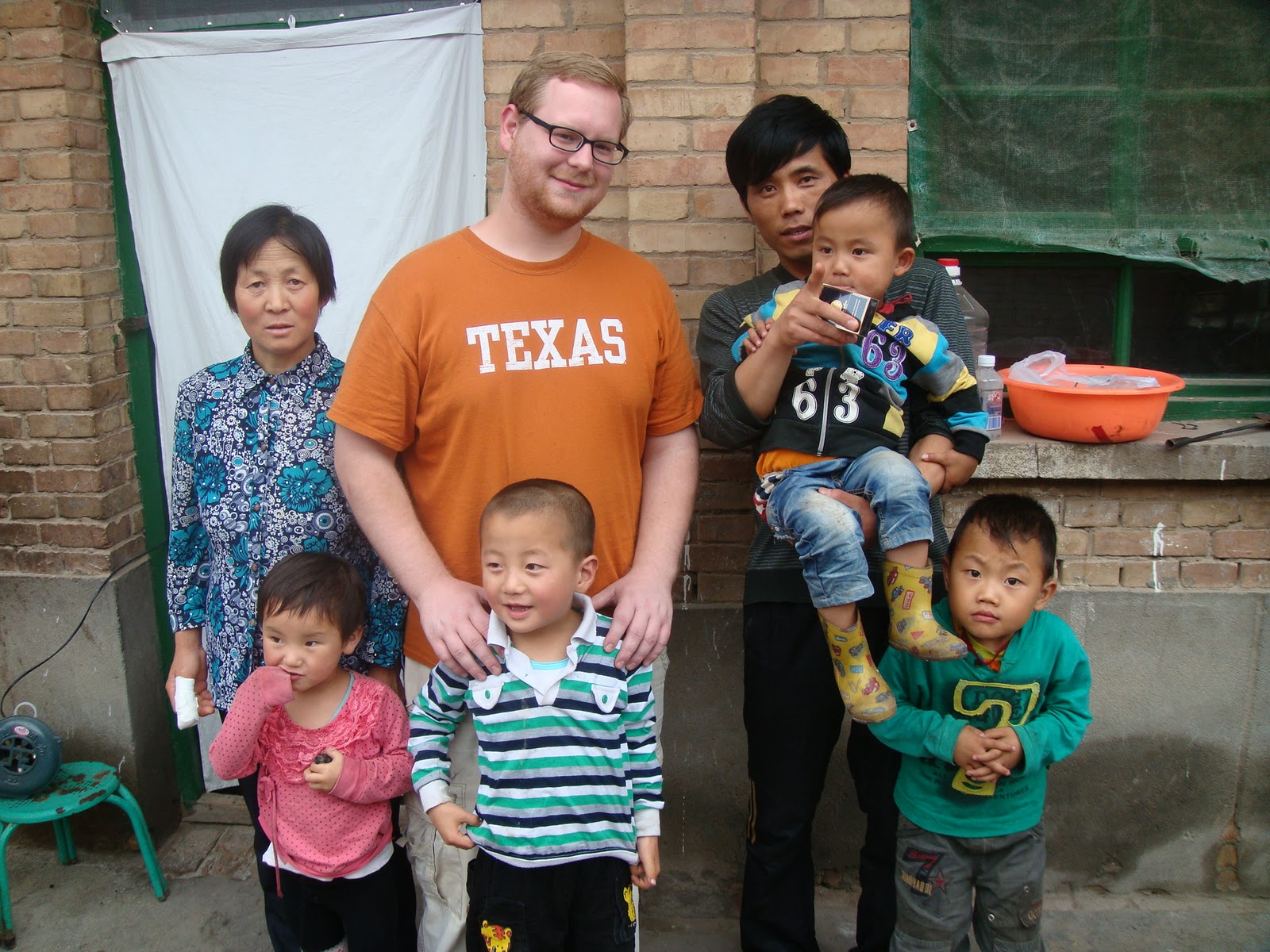
In a couple of days, we're gonna go to Ben's village - where he is originally from. I will stay with him and his family in their cave homes, devoid of showers and an abundance of water. Life is hard in that part of the country, and I hope I can show you guys why I feel such a strong attachment to these somewhat, but in this case, definitely, far-flung places.

I'll be typing up another blog post right after this one --- read if you like! 

See you next time!


-----------------------

Feel free to comment or to subscribe to my blog - it's totally free and no sign-up and I would love to hear from you!

Monday, October 24, 2011

Chinese Hospitality

China in general has a very hospitable culture. People are very open to foreigners and love to be in their company. In your travels, if you meet difficulties such as finding places to go or restaurants to eat at, people on the street are perfectly happy to help you out if you are polite and can speak a little Chinese. If you travel with friends to their hometowns to meet their family, you will find that Chinese familial hospitality is nothing short of first class. The Chinese have a very giving culture, and it will become evident, especially in food culture. What is mentioned below is even more true in the Northwest of China, which is known especially for its hospitality, sort of equivalent to the Southern hospitality of America, but even more so. 

Like mentioned in earlier sections, foreigners are still something of a novelty in developing parts of China, so if you travel with a Chinese friend to their home, his family will be simply ecstatic to host a foreigner in their home. They will have no qualms about fixing dinner, letting you sleep in their beds, watching their TV, smoking their cigarettes, drinking their beer, and buying you gifts. When you are in these situations, it may feel uncomfortable to accept this amount of hospitality, but your hosts genuinely want to give you these things, it is not simply good manners. 

Food is one of the most obvious manifestation of Chinese hospitality. When a Chinese person treats you to a meal in a restaurant or in their home, you will be overwhelmed with hospitality. If you go to someone’s home, you will immediately be offered an arrangement of fruit, sunflower seeds, and a cigarette. They have most likely bought all of this specifically for you, so you should partake of some of it, but make sure to leave room for your meal!

The Chinese have a habit of always ordering/cooking more food than you can eat and pushing you to eat more than you can. When you are full and put down your chopsticks, your hosts will say something to the effect of, “You didn’t eat very much, please, please eat more.” When you say you have had enough, they will continue at least two or three more times and put a little more food on your plate. There is a sort of negotiation process that needs to take place before you are actually allowed to stop eating and it takes a little getting used to before one gets it figured out. The first few times you go to someone’s home or are invited to a restaurant, you will probably eat too much (although the food will probably be excellent). Traditionally, the host of a meal is not allowed to stop eating until the guest has stopped eating because it is seen as impolite if he does so. This figures somewhat into the negotiation process. 

After the meal, you will be offered soup and fruit of some kind to help smooth over your digestion of this massive quantity of food. After you’ve eaten this soup and fruit, you will again be offered sunflower seeds, more fruit, and more cigarettes.  Again, this whole process is part of China’s giving culture and your hosts genuinely want you to be fully satisfied and happy. If you don’t want more, tell your hosts that you are very satisfied and could not possibly want any more. After a brief negotiation, they will believe you and you’re done with your meal!

Besides being hospitable in regards to food, Chinese people are all very hospitable and nice on the streets, with the exceptions of the bigger, New York City type of places, where there are more jerks. When you are a foreigner in a mid-sized or small city, people are very nice and will help you out with anything as long as you can communicate what you want. If you need directions, people will give you directions. If you need to buy something, they will tell/show you where to buy it. If you are just standing around by yourself, they will come up and talk to you just so they can have a conversation, maybe even in English! If you are in a city without a lot of foreigners, there is a 70% chance that the person will ask for your phone number so they can contact you later and if they find out that you have a QQ account (Chinese version of AIM/Myspace), there is a 100% chance they will ask you for your QQ number. Everyone wants to be able to say they have a foreign friend - one, because it makes them seem cooler, but also because they genuinely want to be your friend. It is very different from the American experience, where foreigners are ever-present and no one gives them a second glance. 

In regards to my personal experience in Lanzhou, every time I went outside of the campus by myself, I had a conversation with strangers in both languages. Whether I went to a shop, to see the Yellow River, to stroll around downtown, no matter where I went, I always had at least one conversation with a stranger, about half the time in English. Sometimes they were short, but a genuine effort was made on both sides, which is what really matters. If the conversations were in Chinese, they were always longer and a sort of crowd always gathered. The person would begin talking to me, then would wave to his friends, who came over. Then strangers wondered what was going on, so they came over to watch, and so I would be surrounded by 6, 8, or 10 people while having a simple conversation! This kind of thing happens very frequently in areas without a lot of foreigners. A great way to start this conversation is to, if you smoke, ask for a light, or, if you don’t, ask what time it is. Very simple questions, but they will get you started!

Tuesday, October 18, 2011

Two Chinas

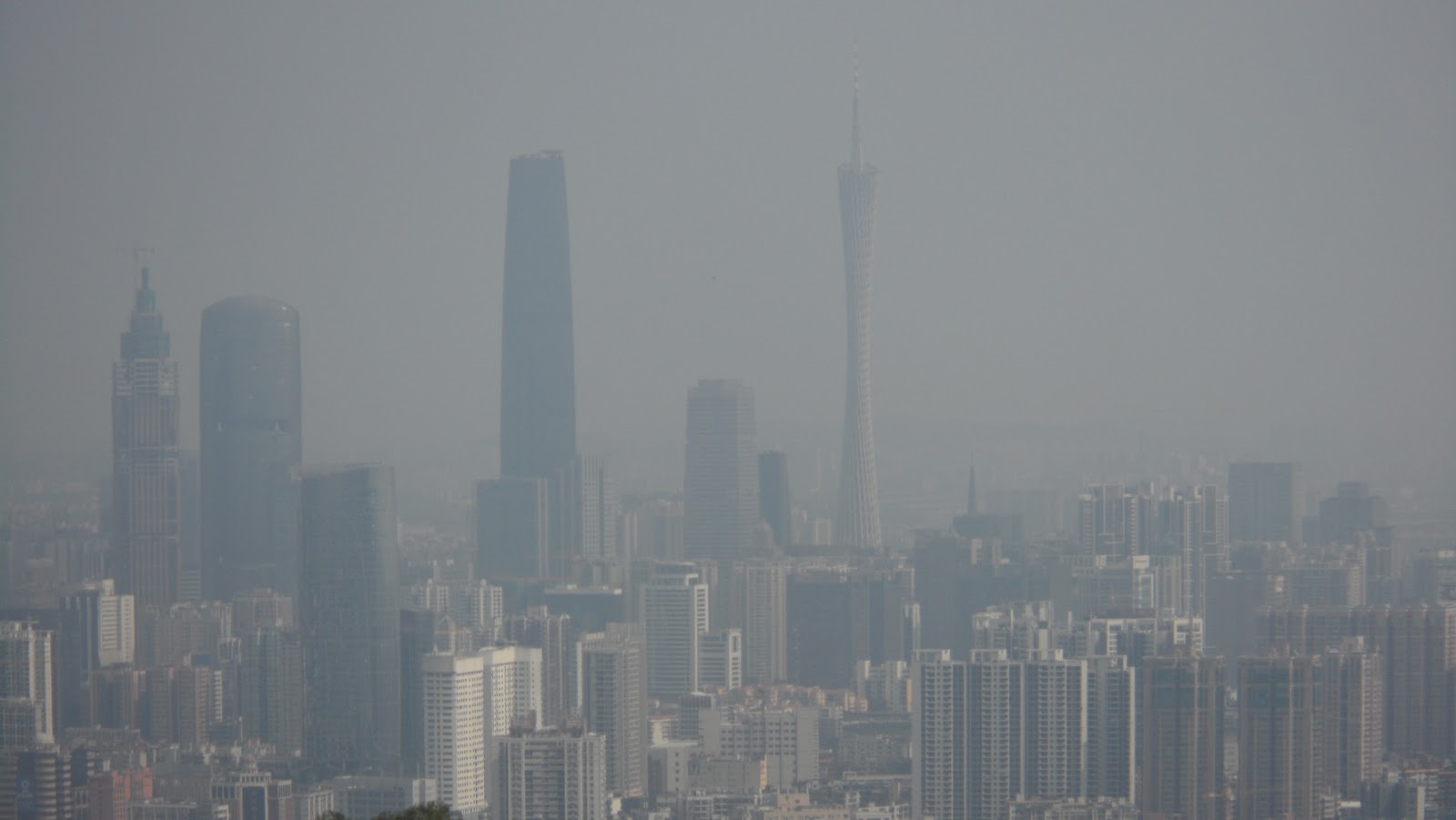
There are two Chinas. One China exists in Beijing, Shanghai, Guangzhou, and Hong Kong. The other China exists in the rest of the country. The main reason these places are as good as different countries is because of development and Westernization. 

In short - this

versus this:

It's a world of difference.

One is even able to find different countries and different worlds even within these Westernized cities. For example, in Beijing, I stayed in hotels and homes far away from the brightly lit and English speaking shopping districts - places with no foreigners and no English speakers - places where speaking Chinese is needed to survive. Even the country’s capital has poor places to rival the images we see of Indian and African slums. These places have one room shacks, trash-strewn alleys and streets, and poorly-clothed people and children. 

Beijing Alleyway/Slum

Not all areas of China are as beautiful as Wangfujing or Tiananmen Square. 

Wanjfujing Shopping District

This is simply reality in China - some areas are incredibly beautiful and amazing to behold, but some areas are poor, polluted, dirty, and difficult to live in. The same is true in every country, and China is no exception. If you want to find a new, excited, fast-paced way of life, you can find it. If you want to find a more rural, relaxed, and traditional environment, you can also find it. 

An easy way to find older and more traditional Chinese culture is to stay in one of Beijing’s remaining Hutongs, which are alleys populated with elderly locals and families.


Within these alleys one can find all sorts of food and community. The elderly sit in the courtyards between their houses or on the street and play chess and watch the passers-by and families come and go as they go to work and pick up their children from school. It is obvious that most of these people know each other and see each other daily, so it is truly a community in the utmost sense of the word. Sadly, these areas are dwindling year by year as some are bulldozed annually to make way for apartment and business building, but some are legally protected by the government as cultural landmarks. 

In Beijing there are many districts, and within some districts, especially in areas concentrated with apartment buildings, things seem more….well, Chinese, and a little less developed. The restaurants are all Chinese and English speakers are rare. Life is more easy-going than the hustle and bustle of the Beijing that most foreigners know. It is the ideal halfway point for a Westerner who knows Chinese to stay if they enjoy the Northeastern style. 永泰小区, in the northern part of Beijing, is one example of this type of place. 
(Pic: The building I stayed in in 永泰小区)


Because Mandarin Chinese is based on the Beijing dialect, understanding the local language presents few problems to the Mandarin learner, in stark contrast to the rest of China, which has numerous dialects. Dialects will be discussed in full in a later chapter. 

Away from the Hutongs are the huge (and expensive) shopping districts of Wangfujing, which is famous throughout China and contains its share of English speakers. The area is brightly lit with lights resembling rain on many streets and modernization is everywhere. Nearby Chang’e Avenue is stuffed with cars, government buildings, and Tiananmen Square lies in the heart of downtown. 

These famous and developed areas of Beijing, just like other famous areas in China, are not much different than the big cities of America. They will, of course, be Chinese, but the feel of these areas and the look of them will be approximately the same. The people who wish to travel to China, but not get uncomfortable with the language difficulty or see and experience things that might shock them will feel right at home in these areas. 

In China’s poorer and less-developed regions away from the east coast, one will find a completely different world of Chinese culture. You can see crowds of people practicing Tai Chi on the streets, doing exercises, playing cards or chess or mahjong, quietly sipping tea and watching the traffic, or downing a few beers with friends and talking to passersby. These things happen in Beijing and the other big cities, but not as much. The environment of the smaller cities very much enhances the feeling of community and people are more relaxed and take things easier. 

A strange phenomenon emerges in many poor areas of the world, including China. In the poorer and less-developed areas, people have less money and live in poorer conditions, but seem to be much happier and content people overall than the wealthy and comfortable people in the cities. The nicest, happiest, and most hospitable people I ever met in China lived in a small 7‘x11’, one room house with very few possessions, no private bathroom, no shower facilities, and even their house was not fully closed to the houses on either side. The top 1.5 feet of the 10-foot wall was open to either side.

 The most kind and hospitable people I have met, on the whole, live in what America calls poverty. The less people have, the more willing they are to share what they have with you. If you spend all your time in China’s big urban areas and never experience what life in rural China is like, you will have missed a wonderful opportunity. 

Wednesday, March 23, 2011

Long Post, But Good (I Think)


Today has been a good day so far. The other two international students, Jack and Dinah, who are from America, were sick today, so I did not have to split the classes with them today, which was really good for me, I think. I got to spend more time with Mrs. Zhu, who is a fantastic teacher (she teaches my Comprehensive Chinese Class) and I got to work on my listening and speaking with her, which was great. As I was in class, I begun to realize just how much better my Chinese has gotten since I got here. I'm really beginning to pick it up - in Mrs. Zhu's class at least - I guess she annunciates better and speaks at just the right speed for me. We found out today that we have the same birthday - "你的生日是一月三十一日?真的吗?我跟你的生日一样!!"
Mr. Li and I had a good time as well talking about Chinese hospitality and banquet customs. He is really pleased at the progress I am making and I am getting much better at translating and reading the textbook for his class (Chinese Culture). Him and Mrs. Zhu are beginning to get a good feel of where I'm at and how best to talk with me. Mr. Shang (my Chinese Writing teacher) still seems nervous and fidgety - we both need to work on our language skills; it'll get better! I still am not a fan of my listening class because it's so difficult, but I don't feel like killing anybody when I leave the classroom anymore, so that's an improvement! Xie Mei is a good teacher, although her English is limited. The moments when we actually connect and understand what the other person is saying are great.
 It's an incredible moment when you realize the true depths of language and how it really is a bridge between cultures and lives. It's easy to take it for granted when everyone is comfortable in their native language and no other languages are around. I'm really glad that I had that realization
I have been spending more time with my radio lately - it's been helping little by little with my listening. There is a good bilingual station called CRI that I listen to - it's China's only bilingual station and it's out of Beijing. 
It's so strange how some days I can be so encouraged and some days I am just down in the dumps about my language. I really am having a good time overall!
Whoa….I just realized I've been in China for one month today! On the evening of the 26th, I will have been in Lanzhou for one month! The time just seems to have flown by - it's crazy….one month already….dang. In some ways it feels like a month and in others, it feels like I just got here.
I really love the students here - they are so amazing. I remember Robert saying "If you ever want to feel like you're famous - you should go to Lanzhou" - it's so true, man. When I'm at the West Campus, especially. There are no foreign teachers or foreign students there, so people get really excited to meet and talk to you if you are American or English-speaking. They have a genuine desire to learn English and to be friends. They always want to treat you to lunch/dinner/drinks, show you around, and just talk. It's great here.

I just want to say it again -  It's an incredible moment when you realize the true depths of language and how it really is a bridge between cultures and lives. It's a profound realization for me.
Related Posts Plugin for WordPress, Blogger...