
[by the way, the blog hit 10,000 total hits a few days ago! Great milestone for me!]
Although I'm not in China now, I can remember very well the daily routine of the life of a foreign student in mid-sized Lanzhou (3.3 million people) when school was not in session. Some of the stuff is not exactly pretty, but it's part of what's really in China. I love China just as much (or more) than America, but there's no such thing as a perfect country.
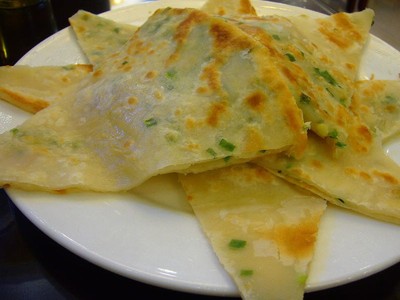 Breakfast
Breakfast usually consisted of 饼子 of some kind (sort of like if a pancake and a crepe had a baby. A wonderful, tasty, baby), and then a short walk to the bus stop to either the West Campus of 兰州理工大学 (Lanzhou University of Technology) or to 西关, a downtown region of Lanzhou. It could be any other place, but for this post it'll be 西关 (pronounced "She-Gwan") and Zhongshan Bridge.
The Bus
In Chinese cities, the bus is what most people take to get places. Depending on where you're at, they can be air conditioned and clean with a few people in them or hot, dirty, musty, smoky, and crowded with all of the migrant workers of the entire city.
It's different from place to place, and you never really know what it's gonna be like when you step on - you just hope to God that it's not so bad.
On an average day in Lanzhou, you'll be standing up in the bus. Only one bus line in the city has air conditioning, and I think it's bus line 1. How appropriate, right? The #1 bus is the only one with air conditioning.
Most buses have windows you can slide open if it gets too hot, but it's generally not too unbearable unless it's the weekend and everybody's going downtown to shop. God forbid. I really didn't enjoy the weekend crowds.
The Streets
Just like every section in this post - it depends on where you are. If you're in Guangzhou or Beijing or any other city that sees a lot of tourist and/or foreign business activity, it's pretty clean and organized with a decent amount of English speakers.
However, if you're in Lanzhou, Huan Xian, parts of northern Beijing, or any other place where not many tourists go and no foreigners "dare to venture", it's a little different. Many streets are dirty or under construction, there's a lot of trash in places, and you can see a lot more of China's poverty. It's in these moments that you are forced to confront the fact that you're in another country. Not many streets in America will have kids wearing only dirty t-shirts run through the street and playing in trash piles and peeing on the street. Seen it.
The People

When walking the streets of Lanzhou, I was usually left alone except for the occasional "Hello," but it was whenever I was idling about by myself or just standing alone looking at the Yellow River that people usually came up and talked to me.
(Okay, this photo is cheating...it's actually on a train, but he DID just start talking to me)
It's true - it's not just some funny story we tell people for fun. People really do come up to foreigners and try to practice their English! If they don't speak English, you'll get to practice your Chinese. This is especially true in certain situations:
1.) The person who comes up to you is alone.
2.) You are alone or are only with other foreigners.
3.) You are just idling about and not really doing anything.
4.) You say you can speak a little bit of Chinese and are friendly.
If you're with another Chinese person, it's rare that a strange Chinese person will approach you if they speak sub-standard English. They'll assume your Chinese buddy will be fluent and that they'll be inferior. Best advice - go alone to a place where you know you can just hang out and chill.

The area on the far side of this picture is green, shaded, and dotted with small beaches and areas where you can sit and buy a drink and just chill.
Along that street, you can see a lot of older people in the morning doing Tai Chi, and in the afternoon you can see some doing different types of martial arts or playing the Erhu or any number of activities.
It's a great little area that reminds you of why you wanted to come to China in the first place.
After hanging out and talking to a few people, it's always cool to go to 西关 (pronounced "she-gwan"), which is the most cosmopolitan area of the city. It's mostly pedestrian roads and has a lot of shopping centers and restaurants and tea houses. It's the perfect place to go for a snack. I don't really have any pictures of 西关 itself, which is something I'll have to rectify, but I've got some video of it here and here if you want to check it out.
Other
Usually, after that, I'd go back home to the apartment and just chill until dinner, which was at one of the local restaurants, but I'd also do laundry every couple of weeks or so. Very involved process you can see here at my YouTube page. If YouTube's blocked in your country, sorry....I'll put them up on Youku eventually
You'll get a few (or a lot) of strange calls. I've gotten calls from:
1.) The International Office of L.U.T. asking if I would hang out with a high school kid who wanted to practice his English
2.) From a local TV producer asking me do participate in a segment about my culture shock in Lanzhou
3.) From a primary school asking me to come down to participate in "English Adventure Day"
4.) From a VERY wealthy businessman who wanted me to help him in some very lucrative (and possibly illegal) business ventures
5.) From many random people that I never met or talked to before.....just to chat! "You're a foreigner in Lanzhou? Oh, what's your name?......etc."
6.) Calls from anyone and everyone inviting me to dinners, parties, just to hang out, help with schoolwork
7.) To travel to Tibet......wait, what? Yeah, I got a series of texts/calls from some random guy who wanted to take me to Tibet. My friend Elizabeth would've jumped on it in a heartbeat haha. Yeah, I don't think I told you about that one, did I? Maybe I should've called you, yeah? haha
I'm a pretty friendly guy, and once I got over there, I made it a policy of mine to never refuse an offer for a new experience unless it was: physically dangerous, illegal, or if I was really ill. I never once did, and I don't regret any of it - I had a lot of interesting experiences, and you've got to be open.
When people find out how open you are to try new stuff, you'll get more and more friends, more and more calls, and you'll be a popular dude! (or chick).
So, if I had to sum up my Lanzhou life in a nutshell, that'd be about it!
See you guys next time,
Austin.


